You’ve got a premium incentive group, an ambitious client, and a nagging sense that the typical luxury resort destination isn’t going to cut it anymore. Your top performers have seen the Four Seasons penthouse suites. They’ve done the Caribbean. What they haven’t done—what almost nobody in their industry has done—is spend three days fly fishing at sunrise, riding through thousand-acre private ranches, and dining under the stars with fifty of their peers.
This guide walks you through everything you need to know to confidently present, contract, and execute a luxury ranch incentive program—from your initial RFP to the moment your group arrives at the property.
Understanding the Luxury Ranch Landscape
Before you start negotiating, you need to know what you’re working with. The premium ranch market isn’t crowded. There are a handful of truly world-class properties that operate at the level your incentive clients expect, and each has distinct positioning, logistics challenges, and contracting philosophies.
Paws Up (Missoula, Montana) is the flagship property for large groups—think 75 to 150 people. It has the infrastructure, the guide capacity, and the experience managing multi-day corporate programs. Brush Creek Ranch (Wyoming) skews toward Forbes Five-Star positioning and commands premium pricing. Ranch at Rock Creek (Montana) appeals to planners who want intimate programming with simpler logistics. Smith Fork Ranch (Colorado) is the most exclusive option for truly small, high-level groups.
Each property has different air access, different minimum commitments, and different seasonal availability windows. Understanding these distinctions upfront will save you months of miscommunication with clients and properties alike.
Air Access and Ground Logistics: Get This Right Early
One of the first questions you’ll face: how do we actually get people there? This isn’t a Miami airport situation.
Paws Up connects through Missoula (MSO), which has both commercial and private FBO options. Plan for a 45-minute ground transfer from the airport, and if you’re bringing a large group, coordinate 8 to 12 van and SUV transfers in advance with the ranch. Don’t assume the property will handle this without clear communication on your end.
Brush Creek Ranch has its own private airstrip (WY33) and accepts turboprops and smaller jets. You’ll work directly with the ranch air team to coordinate landings. If your group is flying commercial, they’ll land in Denver and drive three hours to the ranch—a less seamless arrival experience for a premium program.
Ranch at Rock Creek uses Missoula airport with a 90-minute drive to the property. The ranch coordinates ground transfers, making the logistics simpler than Paws Up.
Smith Fork Ranch connects through Montrose (MTJ), which has both commercial service from Denver and private jet access. It’s a 45-minute drive to the ranch.
For group arrivals at larger properties like Paws Up, stagger incoming flights across a 3 to 4 hour window. Work with the property’s guest experience team—they’ve managed this countless times. Provide detailed flight manifests to the ranch two weeks before arrival, and here’s the key: plan an arrival activity for early arrivals. A cocktail hour, an orientation walk, or the start of the first activity keeps people engaged while you wait for the full group to assemble.
Contracting Intelligence: Know What to Negotiate
This is where luxury ranch incentive planning differs most sharply from traditional hotel contracting. Ranch properties operate on buyout minimums and all-inclusive models, which means your negotiation strategy needs to shift.
Buyout Minimums and Revenue Guarantees
Paws Up requires confirmation of minimum nights and minimum revenue guarantees with their conference services team. These thresholds change seasonally, so you can’t assume the same numbers apply in June as they do in August.
Brush Creek Ranch offers full buyout availability, but you’ll need to commit to a minimum revenue figure. Confirm this directly with their sales team early in the conversation.
Ranch at Rock Creek allows full buyout for programs with a 30 to 50 guest minimum commitment, depending on the season.
Smith Fork Ranch permits full buyout for all programs, but as a smaller property, it has a per-stay minimum commitment that reflects its intimate scale.
The critical point: these minimums are not negotiable in the traditional sense, but they’re also not published on a website. You need to have direct conversations with each property’s sales team to understand what full buyout looks like for your specific dates and group size.
Attrition Terms and Seasonal Strategy
Ranch contracts have tighter attrition windows than hotels. Budget for reduced flexibility here. This is especially true during peak season (July and August), when the properties have maximum demand and minimal willingness to negotiate cancellation terms.
Shoulder seasons—June and September—offer more negotiation room. May and October are viable at some properties, but confirm weather suitability and activity availability before pitching these windows to your client.
Peak season (June through September) requires booking 12 to 18 months ahead. If July or August is non-negotiable for your program, you should be initiating conversations right now for next year’s dates. July and August, specifically, have the tightest availability.
All-inclusive contracts calculate attrition on a per-person-per-night basis, which makes the math straightforward. Unlike itemized hotel attrition (where you’re calculating lost room revenue, F&B revenue, and AV separately), ranch attrition is one simple number: the difference between your guaranteed headcount and your final count, multiplied by the per-person-per-night rate, multiplied by the number of nights.
Deposit and Payment Structure
Expect larger deposits than you would with a traditional hotel group block. Many ranches require 50 percent of the total contract value at signing. This reflects the exclusivity of the property and the fact that they’re likely holding the ranch closed or semi-closed for your group dates.
All-inclusive invoicing is one of the cleaner aspects of ranch contracting. Instead of reconciling separate hotel bills, catering invoices, activity charges, and gratuity, you get one invoice for the entire program. That said, gratuity is typically excluded from the all-inclusive rate. Budget for it separately—it should be factored into your per-person-per-night cost analysis from the start.
Building Your RFP and Planning Timeline
Your RFP to the ranch should include specifics that shape the property’s response.
- Specific dates and flexibility window: If you have some flexibility, say so. If you have none, be clear. Ranches appreciate honesty here.
- Group size with top and bottom range: Don’t just give one number. “60 to 75 people” helps the ranch understand your sizing scenario and build pricing that works across your range.
- Activity priorities: Are you positioning this as a fly fishing program? A horseback riding experience? A spa-focused wellness retreat? The mix of activities drives guide ratios, scheduling, and seasonal suitability.
- Buyout requirement: Be explicit about whether you need full property buyout or whether a partial program is acceptable.
- Budget range: Frame this as per-person per-night all-inclusive. Don’t low-ball here—it wastes everyone’s time.
- Special accommodations or requirements: Are you bringing anyone with mobility concerns? Do you need a specific room configuration? Do you have dietary considerations that go beyond standard restrictions?
Your planning timeline should look like this:
- 18–24 months out: Initial inquiry and hold dates at target properties.
- 12–18 months: Sign the contract; confirm buyout status and final terms.
- 9–12 months: Begin activity planning with the ranch team; confirm guide ratios and instructor qualifications.
- 6 months: Finalize your program agenda; book any off-property activities or outside speakers.
- 3 months: Confirm dietary restrictions with all attendees; finalize F&B program with the ranch culinary team.
- 6 weeks: Provide the final attendee list and flight manifests to the ranch.
- 2 weeks: Final rooming assignments and any special requests (anniversary celebrations, milestone recognitions, etc.).
This timeline is tight, but it’s realistic for properties that operate on lead times measured in seasons, not weeks.
F&B Planning in an All-Inclusive Model
Food and beverage is where you show your client that you’ve elevated the experience beyond a standard resort program.
What’s Included and What Isn’t
All-inclusive ranch programs include breakfast, lunch, and dinner. Confirm upfront whether alcoholic beverages are part of the package or billed separately. Most ranches include wine and beer in the all-inclusive rate but charge premium prices for premium spirits—or exclude them entirely. This is a critical client conversation before you finalize budget.
Dietary restrictions? Ranches handle these exceptionally well. Provide a full list in your RFP and confirm 6 weeks out. From vegan and gluten-free to religious observances and medical restrictions, ranch culinary teams are experienced in accommodating diverse diets without making anyone feel like they’re eating a different meal.
Elevating the Experience with Customization
The all-inclusive format doesn’t mean you’re locked into standard meals. Work with the ranch sommelier or beverage team to source local and regional wines that tell the story of the destination. A Colorado program sourcing from Colorado vineyards, a Montana program showcasing Montana producers—this is the kind of authentic touch that gets mentioned in attendee testimonials.
Customize welcome reception menus to reflect the ranch’s identity and local flavors. Work with the culinary team to develop a signature cocktail for your program—something that exists only for this group, for this moment. It’s a small detail that carries disproportionate weight in the memories people take home.
Most ranches offer a private chef’s table experience at additional cost. This is absolutely worth including for one evening during your program. Twenty to thirty people around a communal table with the chef explaining the menu, the sourcing, the techniques—this is premium programming.
Outdoor dining experiences (campfire dinners, riverside lunches) are typically included in the all-inclusive rate. Coordinate these with the ranch culinary and logistics teams early in your planning process. Weather contingencies matter here; work with the ranch on backup plans.
Designing a Program That Actually Works at a Ranch
Here’s what separates successful ranch incentive programs from mediocre ones: respecting the setting.
What Actually Works
Split activity tracks give people choice without fracturing the group. A competitive track (fly fishing tournament, horseback riding challenges) and a wellness track (spa, yoga, nature walks) with all-group meals keeps everyone participating at their comfort level.
Don’t over-schedule. This is the hardest lesson for conference planners to learn. The ranch environment is inherently rewarding. Unstructured time—sitting on a porch overlooking the valley, conversations with colleagues away from the office, spontaneous activities—is the programming. Leave afternoons partially open. Fill mornings and evenings with your structured agenda; give afternoons back to your group.
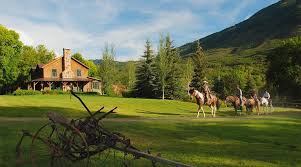
Position the ranch itself as the program. Your agenda is the setting. The thousand acres, the river, the wildlife, the sky—these are your primary programming elements. Activities support the setting; they don’t replace it.
Use meals as programming. Fifty people sitting together in a ranch dining room, sharing meals and conversation, builds more genuine connection than a forced team-building exercise ever could. This is the real value proposition you’re selling to your client.
Make the final night special. A chef’s table, a campfire dinner, an outdoor celebration—endings matter disproportionately. Your attendees will remember how the program ended far more vividly than they’ll remember how it began.
What Doesn’t Work
Don’t run a standard conference agenda in a ranch meeting room. That’s a waste of both your budget and the property’s unique assets. If your program could happen at a Hyatt, it shouldn’t be at a luxury ranch.
Don’t require participation in activities that intimidate non-riders, non-fishers, or people with physical limitations. Build flexible tracks so that everyone can participate meaningfully at their own level. The wellness track isn’t a consolation prize; it’s a legitimate program track with equal value.
Don’t over-program. Two major activities per day is the maximum. Space for reflection, informal conversation, and spontaneity is built into a successful ranch program.
Making the Case to Your Client
When you bring the luxury ranch recommendation to a client, here’s the argument that resonates:
“No one in your industry is doing this yet—but they will be.” You’re positioning your client as the innovator. That matters to leadership teams.
“The all-inclusive format simplifies your budget process significantly.” One invoice, one reconciliation. Cleaner than itemized hotel billing.
“The buyout model gives your top performers genuine exclusivity—not the fake exclusivity of a premium floor at a convention hotel.” They own the entire property. Everyone there is part of their company. That’s exclusive in a way a concierge upgrade never will be.
“Fly fishing the Blackfoot River at sunrise will be in the testimonials for the next three years. The beach will not be mentioned.” Experiences stick. Luxury resorts blur together. A ranch program is memorable.
“Your top performers have earned this. Let’s show them that you know it.” It’s ultimately an emotional sale. This is a signal to high performers that they’re valued.
Choosing the Right Property for Your Program
Each of the premier ranch properties serves a specific planning scenario:
- First-time ranch program, larger group: Paws Up. It has the infrastructure, the team experience, and the capacity to absorb the learning curve of a first-time ranch program.
- Forbes Five-Star requirement, dramatic arrival: Brush Creek Ranch. The property’s positioning and private airstrip create the premium experience a high-level incentive demands.
- All-inclusive simplicity, intimate group: Ranch at Rock Creek. Straightforward logistics, excellent culinary program, 30 to 50 person sweet spot.
- Most exclusive possible, small group: Smith Fork Ranch. When your group is 20 to 30 executives and you want maximum personalization, this property delivers.
Next Steps: Partnering With a Ranch Incentive Planner
Contracting and booking a luxury ranch incentive program requires expertise that goes beyond traditional hotel conference planning. You need a partner who understands ranch logistics, who has relationships with the properties, and who can navigate the unique contracting language and seasonal dynamics of this market.
Contact Conference Innovations today. Our team specializes in luxury ranch incentive planning. We’ll help you develop your RFP, negotiate your contract, design your program, and execute flawlessly from initial concept through final arrival logistics. We’ve worked with Paws Up, Brush Creek Ranch, Ranch at Rock Creek, and Smith Fork Ranch. We know the nuances of each property, the leverage points in each negotiation, and the program design strategies that actually deliver results.
Your top performers deserve this experience. Let’s make it happen.
“`