Uniting Two Audiences
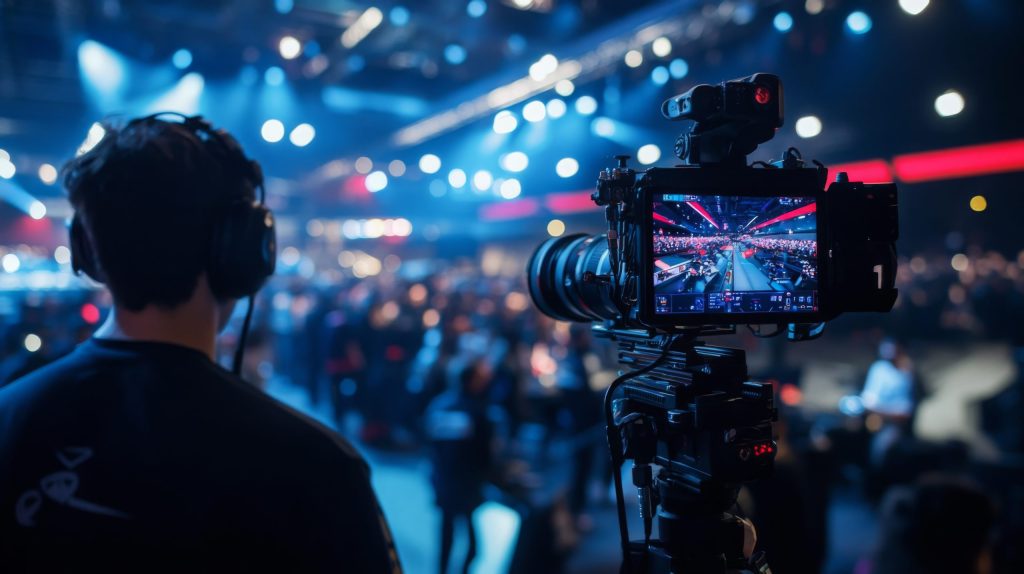
Remember the early days of “hybrid events”? For many of us, that term just meant putting a tripod at the back of a ballroom and hoping the WiFi didn’t cut out. If the remote audience could see the slides and hear the speaker, we considered it a win.
But the industry has evolved, and so have attendee expectations.
Today, planning hybrid events is a high-wire act. You are effectively designing two separate experiences that need to feel like one cohesive journey. It’s a massive logistical challenge, but more importantly, it’s a narrative challenge. How do you tell a story that resonates with the executive sitting in the front row and the analyst watching from their kitchen table in a different time zone?
If you’ve ever felt like you’re planning two distinct conferences for the budget of one, you aren’t alone. The secret isn’t just better bandwidth or fancier platforms—it’s hybrid storytelling.
The Unique Friction of Hybrid Events
Let’s be honest about the elephant in the room: remote attendees often feel like second-class citizens.
When we prioritize the in-room energy—the lights, the applause, the networking over coffee—the virtual audience becomes voyeurs. They are watching an event happen, but they aren’t part of it. This disconnect is fatal for engagement. If your remote attendees feel like they are just watching a TV show, they will treat it like one. They’ll multi-task, mute the tab, or drop off entirely.
The challenge is bridging that emotional distance. You have to fight against the distractions of the home office (the laundry, the emails, the pets) while simultaneously competing with the immersive sensory experience of the live venue.
This is where strategic storytelling becomes your most valuable asset. A strong narrative is the only thing powerful enough to glue these two disparate worlds together.
mastering Multi-Format Engagement
So, how do we keep both audiences on the edge of their seats? The answer lies in acknowledging that they consume content differently.
In-person attendees are a captive audience; they are physically present and surrounded by peers. Remote attendees are independent agents with infinite distractions. You cannot simply pipe the raw feed from the stage to the screen and expect it to work.
Create Exclusive Moments
Consider creating dedicated content for your virtual audience. When the in-person room goes to a coffee break, don’t just show a static “We’ll be right back” slide to your remote viewers. Give them backstage access.
Imagine a dedicated virtual emcee interviewing the keynote speaker immediately after they walk off stage. Suddenly, the remote audience has something the in-person audience doesn’t. They feel special, prioritized, and engaged.
Pace the Day Differently
Screen fatigue is real. While an in-person attendee might tolerate a 60-minute panel, your remote audience likely won’t. Break up the content. Use shorter segments for the live stream, or intersperse heavy content with lighter, interactive moments like polls or Q&A sessions where the remote questions are prioritized.
The Red Thread: Narrative Consistency
At Story Alchemē, we talk a lot about the “red thread”—the core message that weaves through every aspect of your event. In a hybrid setting, this thread must be unbreakable.
Narrative consistency ensures that even though the format of consumption differs, the feeling remains the same.
Visual Alignment
Your visual content strategy needs to translate across mediums. The grand, sweeping graphics on the main stage LED wall might look impressive in the room, but are they legible on a 13-inch laptop screen?
Your design team needs to think responsively. Ensure that your key visual storytelling elements—your branding, your thematic colors, your video content—are optimized for streaming. When the visuals align, the event feels unified.
The Script Matters
Speakers need coaching on how to address a hybrid room. It’s a small shift that makes a huge impact.
Encourage your speakers to look into the camera lens, not just at the people in the chairs. Have them verbally acknowledge the virtual attendees. Phrases like, “I know many of you joining us from London are seeing this differently…” or “I want to see what our virtual chat thinks about this…” go a long way. It signals that everyone belongs to the same story.
leveraging Digital Tools for Connection
Technology should never be the story, but it should always support it. The right digital tools can turn a passive viewing experience into an active contribution.
democratizing the Q&A
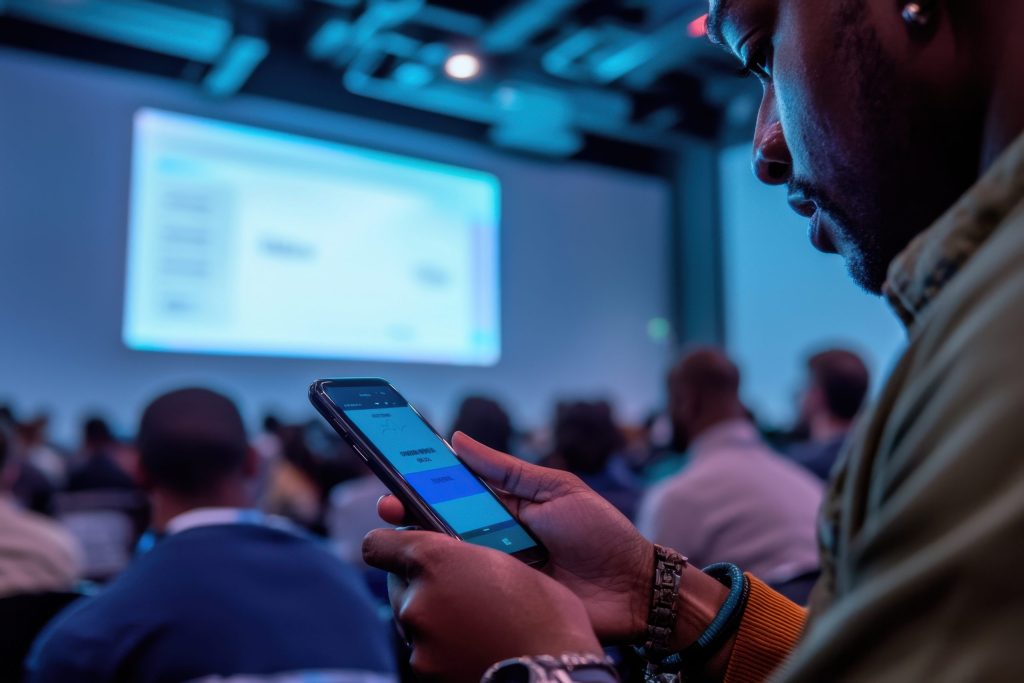
One of the easiest wins in hybrid storytelling is leveling the playing field during Q&A. Use an event app or platform where both in-person and remote attendees submit questions to the same place.
Display these questions on the main screen. When a remote attendee sees their question pop up on the big stage—and hears the CEO answer it live—the physical distance evaporates. They have impacted the room.
Live Polling and Sentiment Analysis
Real-time feedback loops are powerful narrative devices. If you are telling a story about industry trends, pause and poll the audience. Show the results live. Compare the in-room sentiment with the remote sentiment.
“It looks like 60% of our in-room audience is worried about AI, but 80% of our virtual audience is excited about it. Why is that?”
Now, you have created a dialogue between the two groups. You aren’t just broadcasting; you are facilitating a global conversation.
Moving From Logistical to Magical
We know the pressure you are under. You are managing vendors, budgets, speakers, and stakeholders, all while trying to ensure the tech stack doesn’t fail. It is easy to get lost in the logistics and forget the human experience.
But ultimately, people don’t remember the bandwidth speed or the platform interface. They remember how the event made them feel. They remember the stories that moved them and the connections they made.
Hybrid events are here to stay, but they don’t have to be disjointed. By focusing on narrative consistency and intentional engagement, you can turn a fragmented audience into a unified community.
If you are ready to transform your next meeting into a story-driven experience that resonates across every channel, we’re here to help. Let’s make your planning easier and your message louder.